
01
Feedstock
Regional wood-waste sourced from North Carolina forestry and land-clearing operations. Traceable origin, documented moisture, chain-of-custody logged from truck to carbonizer.
Tarheel Carbon Co. converts regional wood waste into biochar—locking carbon into North Carolina farmland and developing high-integrity carbon removals under the Climate Action Reserve’s U.S. and Canada Biochar Protocol.
Corporate buyers are committing billions to removals that actually store carbon for centuries — not offsets that expire with a wildfire. Biochar sits at the intersection of durability, verifiability, and unit economics: delivered today, measured at the molecule, and priced below DAC by an order of magnitude.
The Climate Action Reserve’s U.S. and Canada Biochar Protocol establishes rigorous requirements for project eligibility, feedstock traceability, quantification, monitoring, reporting, and independent verification. Operators who meet those requirements can generate Climate Reserve Tonnes; operators who cannot, do not.
Biochar carbon bound in stable aromatic structures, resistant to microbial decay on geologic timescales.
Developed under the U.S. and Canada Biochar Protocol, with rigorous requirements for quantification, monitoring, reporting, and independent verification.
Regional wood-waste streams keep the supply chain tight, the LCA clean, and the economics defensible.
Regional wood-waste sourced from North Carolina forestry and land-clearing operations. Traceable origin, documented moisture, chain-of-custody logged from truck to carbonizer.
 Tigercat 6040 Carbonizer
Pyrolysis in a Tigercat 6040 Carbonizer. Temperature and residence time tuned to lock fixed carbon into stable aromatic structures — the form that survives for millennia.

Biochar is applied as a soil amendment on North Carolina farmland. Carbon is buried in the root zone where it improves water retention, nutrient cycling, and stays put.
 Continuous dMRV telemetry
Mangrove digital MRV supports production and placement records. An independent, Reserve-approved verification body reviews the project, and eligible verified removals may be issued as Climate Reserve Tonnes (CRTs) by the Climate Action Reserve.
Buyers aren't paying for biochar — they're paying for defensible tonnes. Our dMRV stack closes the distance between a running carbonizer and a retired CRT, so every credit we ship is instrument-grade and audit-ready from day one.
Machine-level telemetry streams temperature, throughput, and runtime directly off the carbonizer. No self-reported spreadsheets. No ambiguity on batch provenance.
Every tonne of feedstock and every tonne of biochar flows through Mangrove’s digital MRV pipeline. A continuous, auditable lifecycle assessment — not an annual PDF.
Verified project data supports issuance through the Climate Action Reserve. Each CRT is uniquely serialized and can be transferred or retired through the Reserve's public registry.
Climate Reserve Tonnes from Tarheel Carbon will be grounded in project economics and supported by continuous MRV. Buyers receive durable, traceable carbon removals with transparent registry tracking—not a promise without evidence.
Representative counterparties across registry, MRV, equipment, and offtake. Engagements noted as active or in-progress.
Biochar isn't a software business, but the carbon removals it produces live or die on data quality. We built Tarheel Carbon around operators who can run the equipment and instrument the process—because both are non-negotiable.

Leads Tarheel Carbon’s commercial, regulatory, and registry workstreams. Owns buyer relationships, Climate Action Reserve project development, and LCA integrity end-to-end.
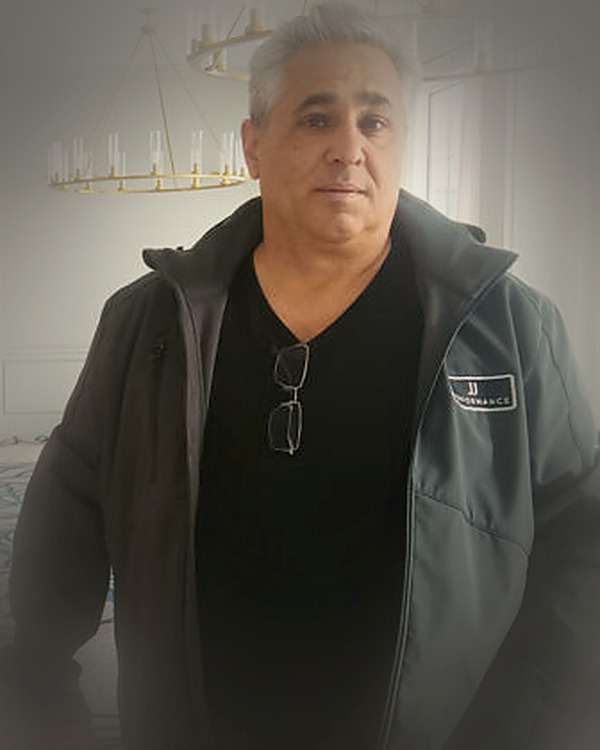
Runs carbonizer operations and owns the data layer feeding dMRV — from feedstock intake through biochar placement. If it moves, it gets logged.
Biochar is a solid, carbon-rich material produced by pyrolysis — heating biomass in a low-oxygen environment. The process converts labile plant carbon into stable aromatic structures that resist decomposition for centuries to millennia.
Whether you're sourcing durable CDR, placing feedstock, or exploring a landowner partnership — tell us what you're building and we'll route it to the right person.